This technique is the foundation of all the work I do with couples. It is inspired by the work of couple therapist Hedy Schleifer. While it probably helps to have a facilitator to guide you though, it is certainly something you can (and probably should) try at home.
The problem

Relationship conflicts are their fault, right? They just don’t seem to be willing or able to listen to what you are saying and really understand your point of view. What they are saying just doesn’t make sense and when you try to help them to see this, rather than thanking you, they get emotional, twist your words and invent things you didn’t even say. When you try to correct them this seems to wind them up even more. So infuriating! Before long you are either in a stand-up argument, a frosty impasse, or have decided to get on with something more achievable like watching a re-run of Friends or tidying up the shed.
Compromise vs connection
Compromise is where nobody gets what they want. Too much of this creates resentment.
A lack of connection IS the relationship problem. Let’s focus on fixing this.
Two roles: What the hell to call them?
Rather than both trying to communicate at the same time what I’m going to suggest is that you take turns. One of you will be talking and the other person will be listening. I don’t really like the titles ‘talker’ and ‘listener’ though. They sound so … basic. What do you reckon? How about ‘revealer’ and ‘witness’? Or ‘sender’ and ‘receiver’? I just can’t seem to remember these new names when I need them.
Listening: learning to wield the power of your attention

When you wield your attention you create a field of psychic power within which only the truth can survive.
The listening role is the most challenging and important so this is the role that you will want to master. The listener puts their need to be right, to explain, and to ask questions aside for an amount of time in order to channel all of their attention (and super human psychic healing powers) onto the other (even if what they are saying is bat shit crazy). In a frosty or heated conflict it only takes one of you to decide to take this role. Make that person you.
Talking: learning to chunk and insist on being heard

To be a really good talker you need to learn to interrupt your own flow and package your ideas into easily digestible parcels of, usually, a single sentence. After every sentence you will pause while you wait for your parcel to be received and unwrapped. If the other person received the contents that you intended them to get then you can deliver the next parcel. If not, then it is your job to ensure that you don’t send anything new until you are satisfied that your last parcel arrived safe and sound.
It may sound rather frustrating to have to pack all your ideas up into single sentence packages but the point of this is to develop trust in the delivery service. The more trust develops, the more delicate and valuable items you will be willing to send. Your packages may eventually contain vulnerable truths about your desires, fears, and past experiences that you didn’t initially realise were related to the issue at hand. This is where the magic happens.
The technique
What we are going to set up is a one sided conversation that doesn’t move on until each idea is fully understood.
Physical set-up

Ultimately what we are after is to have you both sat opposite each other and, if it your significant other, to have your legs overlapping such that you can hold each other’s hands while you are holding each other’s gaze. If you are grumpy with each other you can take ‘being in the same room’ as your realistic start point.
Overview of a turn
For the duration of a turn one partner will listen and the other will talk. A turn could last less than a minute or more than an hour. You can set a timer or sense who needs to be in each role. As a rule of thumb the most emotional person at the time should be the one doing the talking. It is important that both of you get to experience both roles, however, this does not need to happen on the same day.
A turn consists of a series of relatively small packages of information parcelled up by the talker, and unpacked by the listener. At the end of each sentence the listener repeats back what they think the talker said. This may be different to what the talker actually said, or, when hearing it back, the talker may realise that it’s not exactly what they meant. If the message received is not, near as damn it, exactly what the talker intended to send then the talker repeats the message, potentially chunked up into smaller elements.
Sometimes the talker may need to pause for a moment while they reach to remember something or for the right word to use. This could be part of them discovering something so it is important that the listener doesn’t interrupt them or, to quote and old teacher, ‘shut the f*ck up!’. So both parties don’t accidentally stumble into an infinite loop of waiting for each other I suggest that the talker and listener utilise a set of keywords so that everyone knows which stage of the process they are on.
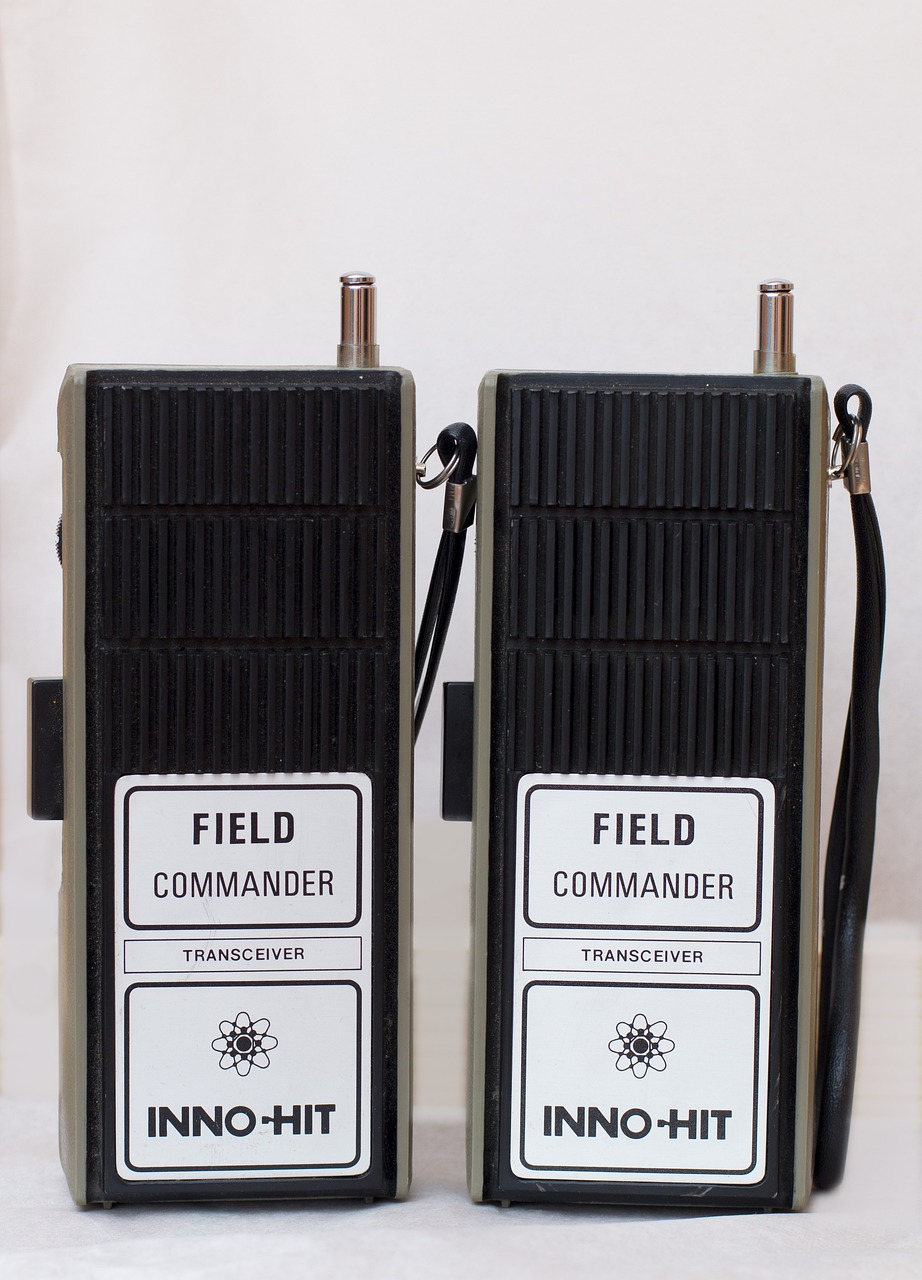
Think of speaking on a walkie talkie where they can either transmit or listen: when you have finished talking you say ‘over’ to let the other party know that you are ready to listen. The phrases I usually suggest for this process are ‘Are you getting me’ to communicate that the message is has been sent, ‘What I’m hearing is’ to communicate that the message has been received, and ‘Am I getting you?’ to ask for feedback.
Just show me an example already
- Listener: And what would you like me to know?
- Talker: Seriously? Are you doing the thing?
- L: Yes I am. And what would you like me to know?
- T: OK fine. I’d like you to know that you are really annoying me right now. Are you getting me?
- L: What I’m hearing is that I am really annoying you right now. Am I getting you?
- T: Yes.
- L: And is there anything else?
- T: Yes, and your general attitude sucks. Are you getting me?
- L: What I’m hearing is that you think my general attitude sucks. Am I getting you?
- T: Yes.
- L: And is there anything else?
- T: Why can’t you just stop interrupting me when I am talking to people? The guy in the shop was just trying to help and you were really rude. You always do this. Are you getting me?
- L: What I’m hearing is that … err … the guy in the shop was being rude but I shouldn’t have interrupted you? Am I getting you?
- T: No. YOU were being rude. It makes me angry when you interrupt me. Are you getting me?
- L: What I’m hearing is that you think I was being rude and that it makes you angry when I interrupt you. Am I getting you?
- T: Yes.
- L: And is there anything else?
- T: [Anger becomes sadness] I just wish we could go out and have fun like we used to. Are you getting me?
- L: What I’m hearing is that you just wish we could go out and have fun like we used to. Am I getting you?
- T: Yes.
- etc.
What questions to ask?

Often when the other person is talking we are using some portion of our attention to come up with a response that defends us or satisfies our desire to know something specific about what they have said. The questions that we formulate may be designed to find weakness in what the other person has said. For example, “But what about …?” This is not what we are doing here.
Here are some questions that that I think are better. They are inspired by the “clean language” of David Grove. The ‘And’ at the beginning is optional but I think it helps the question flow on from whatever has just been said.
- And what would you like me to know? This is a great question to start with if communication has broken down.
- And now what are you noticing? Perfect if you notice that the other person seems to be getting emotional, or going somewhere in their imagination.
- And what what would you like to have happen? Great for gently nudging the other person towards outcomes and actions.
- And is there anything else (about that)? Invites the talker to expand on what has just been said or start a new thought. You will probably use this question most.
An interactive mindfulness meditation
Mindfulness is a bit of a buzzword in the therapy world. What does it actually mean? For me it is about cultivating the ability to notice what is going on inside and in the world around us without judging or making up stories about it. When we can learn to be more present then many of our concerns about the past or future can simply fall away.
This meditation will help you and your partner become more mindful together buy engaging in a slow conversation that focusses on what you are both noticing from moment to moment. I find this is a great introduction to slow conversations as it helps both parties learn the flow of the technique, to trust one another, and to become sensitised their own emotional and imaginary world.
The listener will be asking “And now what are you noticing?” and following up with “And is there anything else about that?”. Then the other person takes a turn. Rinse and repeat for as long as you like.
- Dave: And now, what are you noticing?
- Shanice: I’m noticing your eyes. They really are beautiful. Are you getting me?
- D: What I’m hearing is that you’re noticing my eyes and you think they are beautiful. Am I getting you?
- S: Yes you are.
- D: And is there anything else about that?
- S: Yes, I wonder what you are seeing in me. Are you getting me?
- D: What I’m hearing is that you wonder what I am seeing in you. Am I getting you?
- S: Yes. And now what are you noticing?
- D: I’m noticing that I feel on the spot. Like I’m expected to complement you back. Are you getting me?
- S: What I’m hearing is that you feel on the spot and like you are expected to complement me back. Am I getting you?
- D: Yes.
- S: And is there anything else about that?
- D: It’s quite a familiar feeling if I’m honest. Kind of like feeling guilty for not doing enough. Are you getting me?
- S: What I’m hearing is that, if you are being honest, it’s quite a familiar feeling like guilt. Am I getting you?
- D: Yes. And now what are you noticing?
- S: Hmm. I’m feeling a bit grumpy. Like I wanted this to be nice and now you are telling me that I make you feel guilty. Are you getting me?
- D: What I’m hearing is that you are feeling grumpy. You wanted this to be nice and I’ve made you feel guilty. Am I getting you?
- S: Yes.
- D: And is there anything else about that?
- S: [Crying] Why do I always have to be the happy one? [Pause] Are you getting me?
- D: What I’m hearing is that you wonder why you have to be the happy one. Am I getting you?
- S: Yes. And now what are you noticing?
- D: I’m noticing how sad you are. And that I feel much calmer now. How much I care about you. Are you getting me?
- etc.
Conclusion

Slow conversations won’t always go in the direction you expected them to. That’s the idea! We are creating the conditions for emergence. When things come to the surface and get expressed there is less under the surface to snag you when you are least expecting it.
Why not practice having some slow conversations with your partner? Let me know in the comments how you get on.
 Practical Psychotherapy in Bethnal Green and Online